BS 5930:2015 and Eurocode 7 (BS EN 1997-2:2007) set the standard for ground investigation in the UK, and nowhere is that more critical than in Oxford, where the geology shifts dramatically from dense Oxford Clay to floodplain gravels within a few hundred metres. A properly executed exploratory test pit provides a direct window into the upper strata that boreholes sometimes miss: backfilled medieval pits, buried stream channels, or variable made ground from centuries of development. For projects near the Cherwell or within the Headington escarpment, the test pit remains the most efficient method to examine shallow soil fabric, extract undisturbed samples, and assess trench stability before breaking ground. Our laboratory operates under UKAS-accredited procedures, ensuring every test pit log meets the data quality required by regulators and structural reviewers alike.
A single well-placed test pit can reveal more about shallow ground risk than five boreholes drilled without geological context.
Methodology applied in Oxford
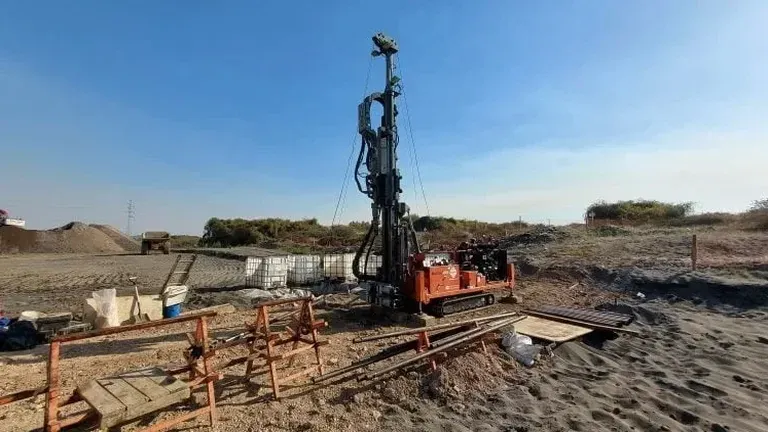
Local geotechnical conditions in Oxford
Oxford's population density—over 160,000 residents within a compact urban footprint—means that nearly every excavation interacts with existing infrastructure. The city sits at approximately 60 metres above sea level, but the real concern is the shallow water table along the Thames and Cherwell corridors. Unexpected sand lenses in the Summertown-Radley gravel can trigger rapid trench collapse if not identified before machine entry. Historic maps of Oxford show former mill streams, filled-in canals, and Victorian rubbish pits that standard desk studies often miss; these features appear clearly once the exploratory test pit exposes the section. Ignoring this step risks not only project delays but also undermining adjacent footings, service trenches, or listed structures. A targeted test pit programme, combined with slope stability analysis for deeper excavations near Jericho or Osney, reduces the residual uncertainty to manageable levels.
Our services
The exploratory test pit is rarely a standalone exercise. The information it provides feeds directly into foundation design, pavement evaluation, and earthworks specification. Our Oxford team combines field excavation with targeted laboratory testing and complementary in-situ techniques to build a coherent ground model.
Foundation investigation package
Test pit excavation paired with plate load testing at formation level and laboratory classification to confirm allowable bearing pressure for shallow footings on Oxford Clay or terrace gravels. Includes assessment of desiccation depth and root influence in clay areas.
Utility trench & infiltration assessment
Focused test pits for SuDS infiltration rate measurement using double-ring infiltrometer within the pit floor, combined with grain size analysis of granular horizons. Typical for soakaway design in the Summertown and Grandpont areas where gravel permeability varies sharply.
Quick answers
What is the typical cost range for an exploratory test pit in Oxford?
A single machine-excavated exploratory test pit in Oxford typically ranges from £380 to £650, depending on depth, access constraints, and whether laboratory testing is included. Tight access in terraced streets or proximity to listed structures can influence the final figure. We always deliver a fixed-price quote after a site walkover.
How does Oxford Clay affect test pit stability and sampling?
Oxford Clay is a stiff, overconsolidated material when fresh, but it degrades quickly upon contact with air and water. We time the logging and sampling to occur immediately after excavation, and use block samples cut from the pit wall when undisturbed fabric is critical. Shoring is mandatory beyond 1.2 m depth per CDM 2015 unless the sides are battered back to a safe angle.
Can test pits be used to locate buried archaeological features in Oxford?
Test pits can reveal the presence of made ground, buried pits, or former stream channels, but they are not a substitute for a formal archaeological watching brief. Oxford has an exceptionally rich archaeological record, and many projects require liaison with the County Archaeologist. Our logs record anthropogenic inclusions and possible features; if significant archaeology is suspected, work pauses until qualified specialists attend.