Across Oxford, the ground beneath a proposed road or car park often reveals more than the desk study suggests. The river gravels of the Thames and Cherwell floodplains sit alongside pockets of soft alluvium and the stiff Oxford Clay formation, creating a patchwork that demands careful pavement investigation. A standard design catalogue is rarely enough. Our approach to flexible pavement design integrates site-specific CBR values, groundwater monitoring from in-situ tests, and an understanding of how seasonal saturation affects the subgrade. We draw on the guidance of HD 26/06 and IAN 73/06 for pavement foundation design. For projects on marginal ground, combining this with in-situ permeability testing helps confirm drainage assumptions before layer thicknesses are finalised—an essential step when dealing with Oxford's variable floodplain deposits.
Oxford's river gravels provide good drainage, but the underlying clay's CBR can halve between summer and winter—pavement design must reflect the wet condition.
Methodology applied in Oxford
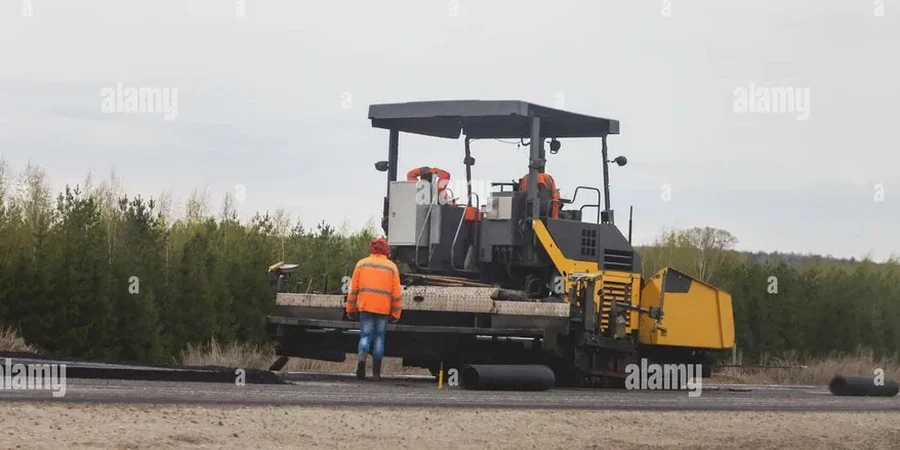
Local geotechnical conditions in Oxford
The equipment we deploy for pavement investigation in Oxford includes a heavy dynamic cone penetrometer (DCP) and a lightweight deflectometer (LWD) for rapid stiffness profiling across larger sites. The DCP is particularly useful on the compact gravel terraces north of the city, where traditional window sampling struggles. The real risk in Oxford's context is underestimating the variability of the subgrade over short distances—a gravel lens can transition to soft clay within twenty metres. Skimping on the number of test points leads to a uniform design that fails locally. Another risk is ignoring the effect of mature tree roots on clay moisture content, which can cause differential shrinkage and pavement cracking. A thorough investigation quantifies these transitions, allowing the pavement design to incorporate targeted capping or geogrid reinforcement where needed.
Our services
We deliver a geotechnical pavement design service tailored to Oxford's ground conditions, from initial subgrade assessment through to foundation class verification.
Subgrade investigation and CBR assessment
Trial pitting, dynamic sampling and in-situ DCP testing across the site to map CBR variability. Soaked laboratory CBR tests on representative samples determine the design value for the pavement foundation.
Pavement foundation design to DMRB
Calculation of capping and sub-base thicknesses based on subgrade CBR and design traffic (msa). We specify geogrid reinforcement where required and verify foundation class through plate load testing.
Construction verification testing
During construction, we carry out in-situ density testing, LWD stiffness checks and level 1 plate load tests to confirm that the placed capping and sub-base meet the specified performance requirements.
Quick answers
What does a flexible pavement design investigation involve in Oxford?
It starts with a desk study of the BGS geology and any historical borehole records. Fieldwork follows: trial pits, dynamic sampling or windowless boring to recover samples and log the soil profile. We then run soaked CBR laboratory tests and correlate these with in-situ DCP or plate load results. The final output is a foundation class recommendation and layer thicknesses based on the design traffic.
How much does a pavement design investigation cost for a typical Oxford car park?
For a typical car park or small access road in Oxford, a pavement investigation including site work, laboratory CBR testing and a design report generally falls between £1,520 and £3,660, depending on the number of test locations and the traffic loading requirements.
Do you need to test the subgrade in winter for an Oxford pavement design?
Winter testing is not mandatory, but the design must use the equilibrium CBR expected under wet conditions. If we test during a dry summer, we apply a reduction factor based on the soil's plasticity index to estimate the winter CBR. In some cases, we recommend a winter verification test if the project programme allows.
What is the difference between a flexible and rigid pavement in practical terms?
A flexible pavement spreads load through multiple granular and asphalt layers—it is the standard for most UK roads and car parks. A rigid pavement uses a concrete slab to distribute load and requires a more uniform support. Flexible design is more tolerant of minor subgrade movement and is easier to repair, which suits Oxford's variable ground conditions.