Oxford's architectural evolution, from its Saxon origins to the dreaming spires, has always been a negotiation with the ground beneath. The city's historic core sits on a patchwork of river terrace gravels and the alluvium of the Cherwell and Thames floodplains, a stratigraphy laid down by millennia of fluvial activity. This geological inheritance means that a shallow foundation design here is never a simple copy-paste exercise from a textbook. The Oxford Clay formation, competent but shrinkable, gives way laterally to soft alluvial silts and peats, creating a subsurface mosaic that demands a forensic approach to site investigation. A structure on High Street might bear on dense gravel at 1.5 metres, while a project just half a mile east towards the Cowley Road could encounter compressible organic soils requiring an entirely different load-distribution strategy. The weight of local precedent, literally and figuratively, informs every calculation we make.
In Oxford, designing a shallow foundation is an exercise in reconciling a 900-year-old built environment with a 150-million-year-old seabed.
Methodology applied in Oxford
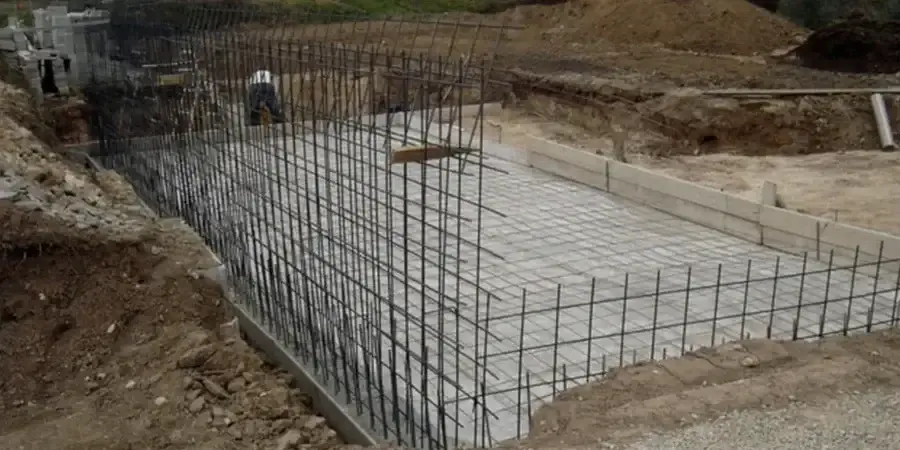
Local geotechnical conditions in Oxford
A recurring mistake we see from contractors unfamiliar with Oxford's ground is treating the terrace gravel as a universally competent stratum without checking for dissolution features or variations in clay content. Proceeding on this assumption, without a site-specific shallow foundation design, frequently triggers differential settlement that cracks masonry in neighbouring historic structures—a costly error in a city where the Party Wall Act is invoked on nearly every project. The risk is magnified in Jericho and Osney Island, where the water table is high and excavations for strip footings can destabilize adjacent, shallow-founded Victorian terraces. Another classic oversight is ignoring the shrink-swell potential of the Oxford Clay during a dry summer; a foundation designed purely for bearing capacity can fail on serviceability grounds as the soil contracts, leading to a seasonally active building defect that is expensive to underpin retrospectively. Proper ground investigation isn't an upfront cost; it's insurance against a six-figure remedial bill.
Our services
Our approach to foundation engineering in Oxford moves from a broad geological appraisal to a laser-focused structural solution, always keeping the cost implications of over-design and the safety risks of under-design in balance.
Bearing Capacity & Settlement Analysis
Analytical and finite element modelling to determine the ultimate and allowable bearing pressures under strip, pad, and raft foundations, separating immediate settlement from long-term consolidation in Oxford's alluvial corridors.
Heave & Shrinkage Risk Assessment
Detailed assessment of volumetric ground movement potential in Oxford Clay, using plasticity indices and suction data to specify foundation depths that neutralize seasonal moisture variations and nearby tree root influence.
Groundwater & Drainage Consideration
Design of sub-surface drainage and waterproofing systems for shallow foundations in Oxford's flood-prone postcodes, integrating BS 8102 protection grades to keep basements and ground-bearing slabs dry.
Party Wall & Adjacent Excavation Support
Temporary works design and method statements for excavating shallow foundations within 3 metres of a neighbouring structure, critical for Oxford's tight urban sites where historic walls are sensitive to ground movement.
Quick answers
What depth of ground investigation is needed for a standard shallow foundation design in Oxford?
For a typical strip footing, boreholes or trial pits should extend to at least 3 metres depth, or 1.5 times the foundation width below the bearing stratum, whichever is deeper. In Oxford, we specifically look to prove the continuity of the bearing gravel and to sample the underlying clay to check for any soft zones that could cause excessive settlement.
How much does a shallow foundation design package cost for a house extension in Oxford?
For a typical residential extension or new build in Oxford, a complete design package—covering the desk study, ground investigation specification, interpretive report, and foundation design calculations—generally falls between £1,380 and £2,650. The final figure depends on the site's complexity, access constraints, and the proximity of large trees or watercourses.
Can you design a raft foundation if the ground is too poor for strip footings?
Yes, a raft foundation is often the most practical solution on Oxford's alluvial soils where bearing capacity is low and settlement might otherwise be uneven. We model the soil-structure interaction to design a rigid or semi-rigid raft that bridges soft spots, reducing differential movement without the need for deep piles.
Do you handle the Building Control approval process for foundation designs in Oxford?
We prepare the full design package—geotechnical interpretive report, structural calculations, and detailed drawings—to satisfy Oxford City Council Building Control requirements. While the applicant or builder typically submits the forms, our documentation is engineered to meet the technical scrutiny of Approved Inspector reviews without delay. More info.