Oxford’s built environment sits on a complex geological sequence that has shaped foundation engineering in the city for over a century. The floodplain of the River Thames and River Cherwell deposited metres of alluvial silts, sands, and gravels across the valley floor, while the surrounding hills rest on the stiff, overconsolidated Oxford Clay Formation. This juxtaposition means a pile foundation design that works near the Botanic Garden may be entirely wrong half a mile away in Jericho, where groundwater rises within a metre of the surface during wet winters. The city’s 13th-century colleges and their continuous programme of extension and conservation add another layer: many sites contain archaeological constraints, medieval cellars, or undocumented Victorian backfill. When we prepare a pile foundation design in Oxford, we are rarely working on a clean, predictable profile. The borehole log from Summertown will look nothing like the log from Osney Island, and treating them as equivalent is the fastest way to differential settlement problems. The CPT test data we gather in the river gravels often reveals loose lenses at depth that standard SPT sampling misses, which directly influences the selection between driven and bored pile types.
A pile in Oxford gravels cannot be designed purely from desk study correlations; the interface between alluvium and Oxford Clay demands site-specific investigation and conservative shaft friction assumptions.
Methodology applied in Oxford
Procedure video
Local geotechnical conditions in Oxford
The Thames gravels across central Oxford contain high groundwater that rises rapidly in winter months, and in several postcode areas around Osney and Botley the water table sits permanently within two metres of finished floor level. This creates two critical risks for pile foundation design: buoyancy effects on lightly loaded structures, and installation difficulties where casing cannot be advanced fast enough through running sands below the gravel. We have also observed localised lenses of peat and organic silt in the floodplain alluvium east of the Cherwell, near the Marston cycle path, where the undrained bearing capacity drops to values that would fail a conventional pad footing. A pile foundation bypasses these weak horizons, but only if the pile toe is founded deep enough into the competent Oxford Clay. Stopping the pile in the transition zone—half in gravel, half in clay—generates a risk of progressive settlement under fluctuating water pressures. Our investigation programme always includes at least one borehole advanced to twice the anticipated pile length, precisely to identify the depth to the stiff grey clay and to confirm there is no artesian pressure trapped beneath the weathered crust.
Our services
Our pile foundation design work in Oxford covers the full engineering cycle from desk study through to construction-phase testing. Each project is assigned a chartered geotechnical engineer who remains the single point of contact, ensuring the design intent stays coherent from the first borehole to the final pile load test report.
Geotechnical interpretative report and pile design
We compile site investigation data into an interpretative model of the Oxford Clay and river gravels, then produce a pile foundation design with full calculation of axial capacity, settlement, and lateral response under the load combinations specified in BS EN 1990. The report includes pile layout drawings, material specifications, and an installation method statement.
Static and dynamic pile load testing
On-site verification of design assumptions using maintained-load tests or high-strain dynamic testing. We instrument test piles with strain gauges and extensometers where required to separate shaft and base resistance, giving the design team confidence in the mobilised adhesion factors across the Oxford Clay interface.
Construction-phase monitoring and pile integrity testing
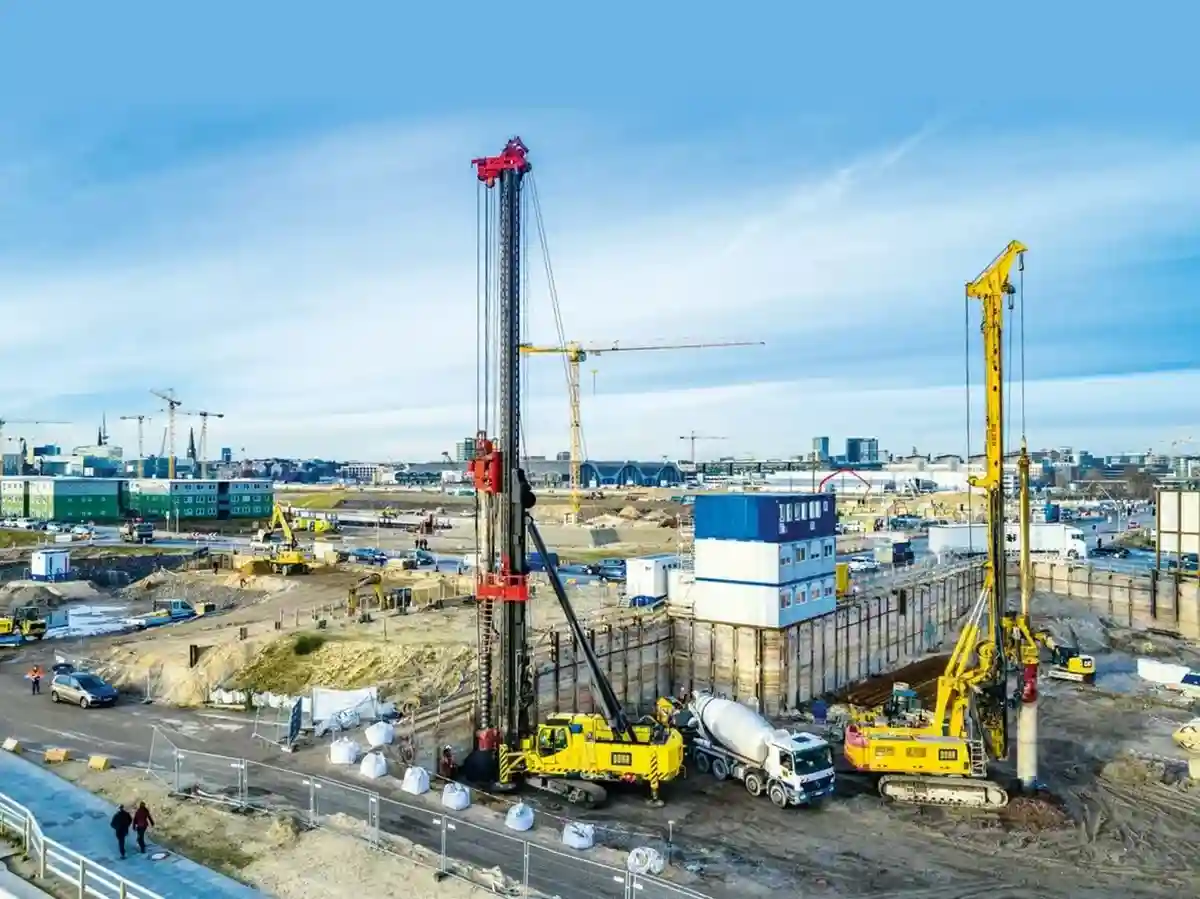
Low-strain sonic integrity testing and cross-hole sonic logging during production piling. We also supervise CFA installation parameters—penetration rate, torque, concrete pressure—to detect soft ground inclusions in the gravels before they become defects.
Quick answers
What is the typical cost of a pile foundation design for a residential extension in Oxford?
For a single-storey rear extension or a two-storey side extension on a typical Oxford terrace plot, the design package—covering site investigation specification, pile foundation design calculations, and a design report suitable for building control submission—generally falls between £1,200 and £5,460. The final figure depends on the number of boreholes required, the pile type selected, and whether a pile load test is specified as part of the verification process.
Which type of pile is most suitable for the Oxford Clay formation?
Continuous flight auger piles are widely used in Oxford because they suit the stiff clay well and minimise spoil removal on constrained city sites. Driven precast piles also perform well in the gravels but can be problematic where headroom is tight or where vibration must be controlled near listed structures. The final choice depends on the depth to the competent clay, groundwater conditions, and the load per pile required.
How deep do piles typically need to go in Oxford?
In the city centre and along the river corridors, pile toes are commonly founded between 8 and 15 metres below ground level, penetrating through the alluvium and well into the stiff grey Oxford Clay. On the higher ground of Headington, where the clay is closer to the surface, pile lengths can be shorter, often 5 to 9 metres. Every design is site-specific and confirmed by borehole data.
Do building control authorities in Oxford require pile load testing?
Oxford City Council building control typically expects a minimum of one static load test or a programme of dynamic tests on working piles for any project with more than a handful of piles, particularly where the design relies on shaft friction in the Oxford Clay. The testing requirement is usually written into the approved design and checked at the completion stage.